
How to Communicate with Someone Who Has Hearing Loss
July 6, 2017
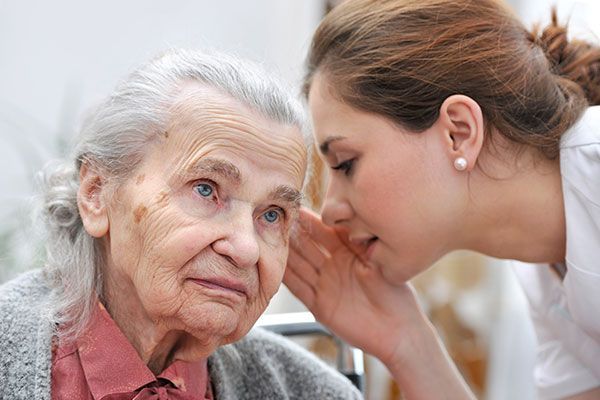
We’ve been to our fair share of family picnics and barbecues already this summer, and we’ve seen seniors with hearing loss and their loved ones struggle to communicate at times. Roughly one-quarter of Americans 65 to 74 years of age and half of those 75 and older have disabling hearing loss, according to the National Institutes of Health.
If you or a loved one has experienced hearing loss, read on for our tips for better communication:
- Get your listener’s attention. Address the listener to gain their attention. If necessary, touch their hand, arm or shoulder gently. This signals the beginning of your conversation, helping them tune in immediately. It’s difficult for anyone to jump in and answer questions mid-conversation.
- Position yourself to be seen and heard. Move yourself into their line of vision, since many with hearing loss make use of lip-reading, at least to some extent. Do not obstruct your mouth with your hands, food or drink. Avoid poor lighting as well. If they favor one ear, sit on that side.
- Understand perceptive listening. Many with hearing loss use context clues to enhance their understanding of a conversation. After all, most communication is nonverbal. Express yourself using your tone of voice, affect, body language and physical touch to help convey your message.
- Communicate clearly.
Shouting and speaking slowly are surefire ways to frustrate, offend and hurt the feelings of your loved one. Focus on communicating clearly and concisely and speak deeper, not louder.
- Rephrase your message. Some only struggle with certain sounds or letters, so consider rephrasing your message. Doing so can also provide additional context to your message.
- Reduce background noise. Music, the noise of a television and the overlap of multiple conversations can obscure your speech. Move to a quieter area or turn off the stereo or television.
- Encourage them to wear their listening devices. Some find wearing a hearing aid to be uncomfortable, either because of the physical fit or volume level. Encourage them to work with their doctor and/or audiologist to address any discomfort.
- Be patient. Hearing loss can be a frustrating and emotional experience. Do your best to accommodate your loved one’s new needs and include them in your conversations.
More From Our Blog

Learn how light exercise and gentle movement help MS patients maintain mobility, build balance, and reduce flare-ups through safe, supervised routines.

Learn how to handle difficult conversations about care needs with empathy, planning, and solutions-focused dialogue that brings families closer together.

Learn the key differences between in-home care and home health care — services, insurance coverage, and how to choose the right fit for your loved one.

Explore safe, affordable transportation options for seniors who no longer drive, including ride-share services, community shuttles, and help from family or friends.

Reduce fall risks and support mobility with practical tips on home safety, supervised recovery, and safe exercises to maintain strength and independence.

Discover how companionship enhances dementia care by reducing loneliness, building trust, and providing vital emotional and mental stimulation for improved well-being.

Discover how companionship improves seniors’ well-being by reducing loneliness, building meaningful relationships, and fostering a strong sense of purpose.

Learn practical nutritional guidance for MS patients living at home, including anti-inflammatory foods, energy-boosting strategies, and how to avoid common dietary triggers.

Learn practical tips for safely managing medications for elderly loved ones, including organizing pills, ensuring proper dosing, and avoiding prescription errors.