How to Make Your Home More Accessible for MS Patients
Home modifications for MS care require specific steps to create accessible living spaces. The spaces require adaptation because MS creates mobility problems, balance issues, and fatigue, which require modifications for safety and independence. Strategic changes in the home will enhance daily comfort while minimizing accident risks. Three essential modifications can improve accessibility for MS patients in their homes.
Install Grab Bars and Widen Doorways for Accessibility
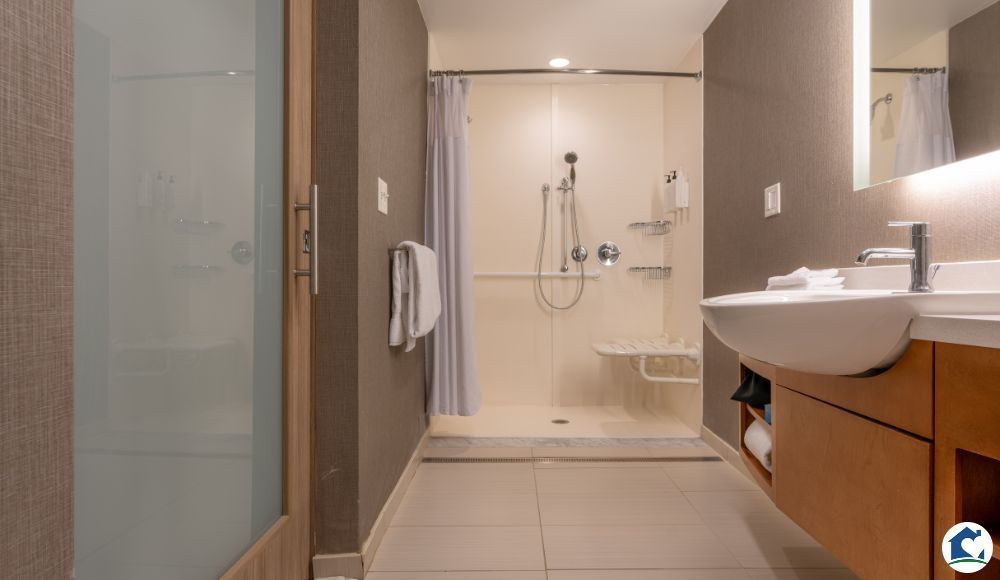
Restrooms, hallways, and stairwells are notorious for causing stability issues, so grab bars are a crucial safety precaution. Installing them close to bathtubs, showers, and toilets allows for safe passage between slick surfaces. Maximum stability is ensured by textured grip bars mounted securely on wall studs.
Wider doorways are another essential modification that enables wheelchair and walker accessibility. Standard doorways present a problem because they do not provide enough space for mobility aids to pass through. The expansion of doorways to 32–36 inches creates better accessibility and more effortless movement throughout the house. The installation of offset hinges represents a feasible solution when complete renovation is not possible because it provides additional clearance without requiring major construction work.
Ensure Sufficient Lighting and Remove Trip Hazards
People with MS often have vision changes or balance problems, so good lighting is essential for preventing falls and assisting them in navigating their environment. Install luminous, movable lighting in strategic locations such as entrances, stairs, and hallways. Because motion-sensor lights eliminate the need to look for switches in the dark, they are invaluable for nighttime safety.
Eliminate tripping hazards, such as exposed cords, cluttered walkways, and loose rugs. Choose secured or low-pile rugs with non-slip backing, and keep furniture and obstructions out of the way. If there are stairs in the house, think about adding railings on both sides and painting the steps contrasting colors to increase their visibility.
Creating Easy Access to Essential Areas of the Home
Reducing needless movement in the house promotes independence for people with MS and helps save energy. To prevent bending or reaching, place frequently used items at waist height, such as medications or kitchen necessities. Lazy Susans and pull-out shelves can make it safer and simpler to get supplies in the kitchen.
Make accessibility a priority in bathrooms and bedrooms. Bathing can be safer and less taxing on the body with walk-in showers that have built-in seating, handheld showerheads, and non-slip flooring. Make sure the bed in the bedroom is at a comfortable height, and think about installing strong bedside rails to provide support when getting in and out.
If possible, create a single-story living area, or at least make sure that all the most-needed spaces are on the main floor to minimize the need for stairs. This is particularly helpful during flare-ups when fatigue or mobility issues are more pronounced.
Final Thoughts
Creating a space that encourages independence and dignity is more important than just making a home safe for someone with multiple sclerosis. In everyday life, minor adaptations like installing grab bars or changing the lighting, along with more substantial ones like enlarging doorways, can have a significant impact. A home can be made into a comforting, confidence-boosting environment with careful planning.
We Can Help You Create an Ideal Living Arrangement for Someone with MS
Comforting Home Care by Phoebe collaborates with your family to design the optimal living arrangement for your family members. We are committed to helping our clients manage their MS and live on their terms. We help make it possible for individuals suffering from MS to maintain their independence, stay in their own homes, and get out of their homes from time to time with the proper help.
Call us today at 610-625-5206 to learn more about our home health care services or connect with us online.
More From Our Blog